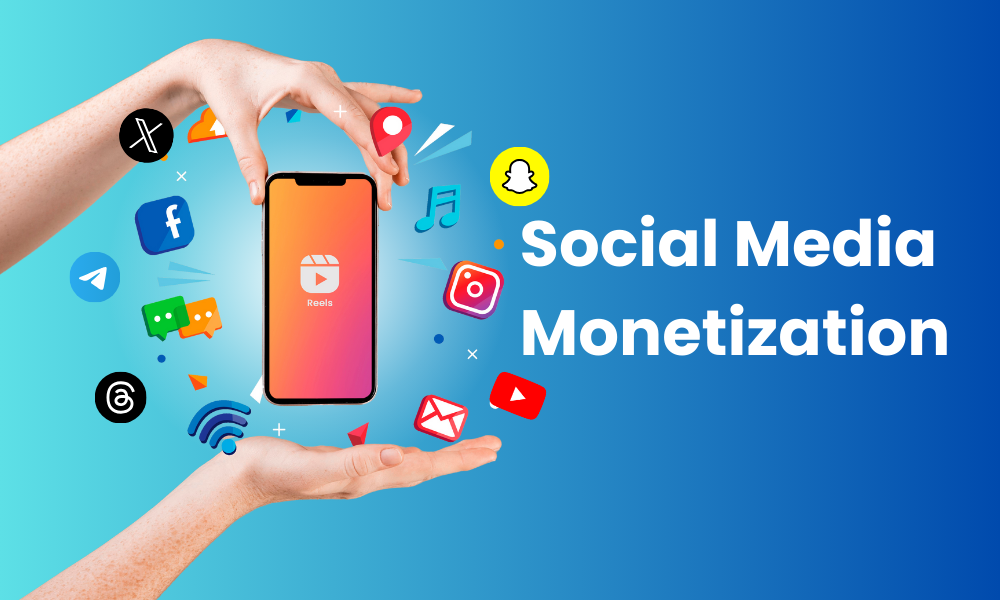
Social media is much more than just a means to share photos or catch up with friends; it is, rather, a huge, active marketplace. For anyone building a new social platform, a community, or even a successful content channel, the big question will be heard sooner or later: How do we make money? The process of transforming user activity and attention into profit is called social media monetization.
It is a key decision because the manner in which you decide to generate income directly influences the way your users interact with your platform and the speed at which you can scale. Choosing the wrong path will annoy your audience and bring your platform to a grinding halt. But picking the right one will be a long-lasting, profitable business.
In this blog, learn the most popular and effective social media monetization models and will help determine which one is the perfect match for your unique platform and community.
What Is Social Media Monetization?
In other words, social media monetization refers to various ways a social media platform can generate revenue. To simplify, consider the creation of a shop wherein one must decide whether to: sell products directly; ask for an entry fee; or let advertisers put up posters in one's shop for a fee.
In other terms, for social platforms, this "shop" is the digital space where users interact. Social media monetization is supposed to turn that user activity and attention into regular income that covers costs like server maintenance, employee salaries, and further development while providing value.
Social Media Monetization Models
1. The Foundation: Advertising Models
The first and most widespread method of Social media monetization is by advertising. This model is the backbone of giants like Facebook, Instagram, and YouTube. The core idea is simple: the platform offers its service for free to users, while in return, it sells their attention to businesses that want to reach them.
In 2023, the revenue of Meta, the parent company of Facebook and Instagram, was in excess of $134 billion. What's more, the vast majority came from advertising. Such an immense success shows just how effective targeted ads can be if you have billions of monthly users.
How it works: The platform displays ads within a user's feed, as banners, or as short videos before other content. They charge advertisers based on how many people see the ad (impressions) or click on it.
Examples: Facebook and Instagram are masters of this. You see sponsored posts seamlessly blended into your feed. YouTube runs skippable and non-skippable ads before and during videos.
Pros:
-
- It keeps the platform free for users, assisting them to attract a large audience quickly.
- It can be highly profitable if you have a massive number of active users.
Cons:
-
- Users find advertisements intrusive and annoying.
- Targeted advertising using user data is getting more and more scrutiny as concerns about data privacy are rising.
Best for: Platforms that have, or aim to have, a very large and diverse user base.
2. The Freemium and Subscription Model: Pay for More
This is a model wherein a basic, functional service is free but special features, mainly premium, are available at a monthly or yearly fee. It's like a free entry to a museum where you pay extra for the special exhibit audio guide.
How this works: The free version attracts a broad user base, but the paid "pro" or "premium" version offers enhanced tools, ad removal, or exclusive content.
Examples: LinkedIn Premium offers advanced insights on who viewed your profile, better search filters, and access to online learning courses. Many dating apps, like Tinder, use this model with their "Tinder Gold" subscription, where users can see who already liked them.
Pros:
-
- It creates a predictable and recurring revenue stream.
- It directly aligns the platform's success with providing real value to its paying users.
Cons:
-
- It can be difficult to determine which features users should get for free and which should be placed behind a paywall.
- The biggest risk is creating a two-tier user experience, wherein free users will be left out.
Best for: Platforms focused on professionals, niche hobbies, or services where advanced tools provide clear, tangible value.
3. The E-commerce and Affiliate Model: Shopping Within the App
This model transforms social platforms into virtual shopping malls where users can directly purchase products without having to leave the app, instead of just talking about the products.
How it works: It works in two ways,
-
- Direct Sales: The platform allows brands to set up digital storefronts.
- Affiliate Sales: Makers share links of certain products; whenever any of their followers make a purchase using the link provided, the maker gets a small amount from the sale and the website running the content takes its cut.
Example: The "shopping" options in applications like Instagram and Pinterest, where users can tap on a post and instantly purchase the item. It has also seen the rise of TikTok Shop as one of the leading options for creators to sell products during their live streams.
Pros:
-
- It provides users with a seamless and hassle-free experience.
- It opens a powerful revenue stream both on the platform and for its content creators.
Cons:
-
- It requires building a secure and trustworthy payment infrastructure.
- If overdone, this can make the platform feel too commercial and less social.
Best for: lifestyle-oriented platforms, fashion, beauty, hobbies, and influencer culture.
Scaling Monetization with Scale Social: Successfully implementing e-commerce and affiliate models requires a constant stream of high-quality, authentic creative. Scale Social addresses this challenge with an AI-enabled content infrastructure that sources and scores user-generated content (UGC) at scale. By leveraging an AI Director to moderate submissions and coach creators in real time, Scale Social ensures brands can deploy rights-cleared, performance-driven assets across all channels. This systematic approach allows platforms to turn user activity into compounding revenue, helping brands flood every surface with the right content at the right moment to drive predictable social commerce outcomes.
4. Virtual Goods and Creator Support: Funding Creativity
This model lets users spend money directly to support creators or enhance their own experience within the platform. It's like throwing money into a street performer's hat or buying a souvenir at a concert.
How it works: During a livestream, users buy digital goods-special emojis, stickers, or virtual gifts-to give to their favorite creators. The platform takes a cut of the sale.
Examples: The classic example is Twitch, which allows viewers to use "Bits" to cheer for streamers. On YouTube, a "Super Chat" feature lets users pay to highlight their messages during a live chat.
Pros:
-
- It allows content creators the opportunity to make money directly from their audience; this incentivizes the quality of the content.
- It creates a strong sense of community and direct appreciation between the fans and creators.
Cons:
-
- Revenue is usually concentrated among a few very popular creators.
- It is very much based on a highly engaged, rather than simply large, audience.
Best for: Live-streaming services and any community built heavily around individual content creators.
Choosing Your Platform's Perfect Match
The determination of the proper Social media monetization model, or more realistically, the right mix of models, is a huge strategic step. You have to take into consideration what your platform is all about.
1. Consider Your Audience and Content
-
- Mass Audience & General Content? If you want to get to billions of users, and if your content is general, say general news, memes, or entertainment, the Advertising Model is the most proven route to massive scale.
- Niche Audience & High Value? Targeting a specific, valuable interest - for instance, professional networking, advanced coding tutorials, or high-end hobby, the Subscription Model or a mix with e-commerce will work much better. Your users are willing to pay for things that are hard to find.
2. Prioritize User Experience
The most important advice in Social media monetization is this:
Do not make the users' experience worse. Too many ads, too complex paywalls, or features that feel pushy will drive people away.
-
- A platform built on trust, such as a professional network, should employ ethical monetization methods-like Premium Subscriptions or specialized hiring tools-rather than aggressive, data-heavy ad campaigns that feel far too invasive.
- A fun-based platform for entertainment, such as a short-video app, can easily include less intrusive ads or rely on Virtual Goods without upsetting its users.
3. Mix and Match for Stability
Today, smartest platforms use a mix of models. Relying on only one source of income can be risky. For example, if ad spending falls off globally, then a platform that uses the advertising model alone will not do well.
A healthier approach is often a blend:
-
- Core Free Service + Targeted Ads: To cover the basic costs and attract a large audience.
- Optional Premium Subscription: For stable, recurring income and an enhanced experience for super-users.
- Integrated E-commerce/Fees: To make money from transactions users are already motivated to perform.
Thoughtfully combining these models, your platform will appeal to the masses while offering unique value to the most loyal members and continue to stand on firmer financial ground for an extended period. The proper strategy for Social media monetization is the bridge that turns a bustling community into a sustainable business.
Building a Sustainable Future
There is no single "best" model for social media monetization. The best model is one with which your users are happy. It should feel like a natural part of the experience, not some annoying interruption. The core of any successful social media monetization strategy is value. You need to provide undeniable value to the users, whether they are enjoying the free version or paying for extras.
When you understand the needs of your audience and align those needs with the right revenue model, you can build a platform that isn't just popular but also profitable and built to last.
To learn more, visit KnowledgeNile!
FAQs
1. What is monetization on social media?
Answer: Monetization on social media allows creators to monetize their publishing. It is based on ads, subscriptions, or donations from their fans.
2. How much does social media pay per 1000 views?
Answer: Earnings are highly variable depending on the platform and can range from several cents to several dollars.
Recommended For You:
A Rundown of Top 10 Social Media Trends in 2025 Brands Need to Keep an Eye on