
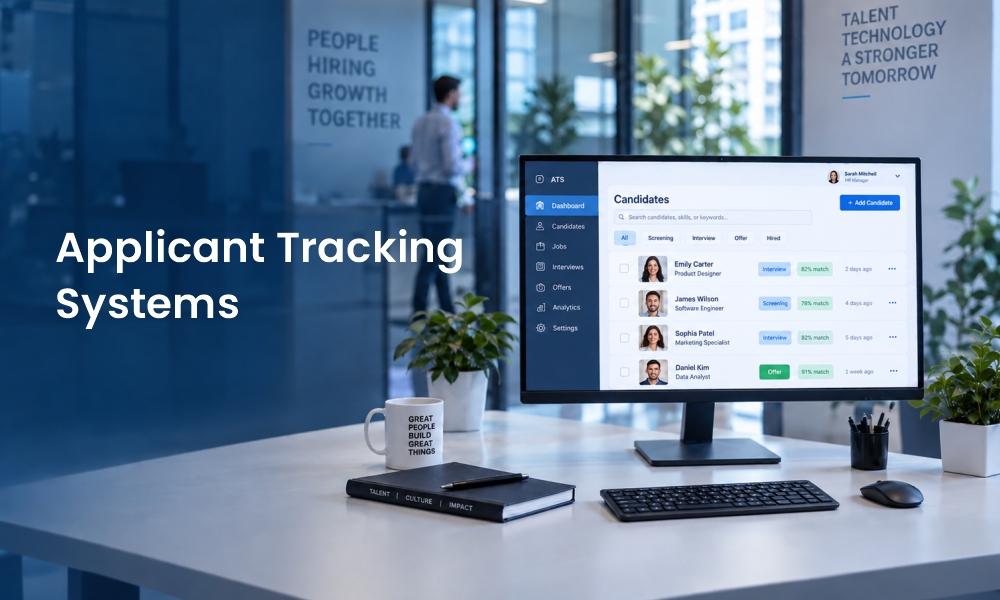
Are companies struggling to find the ideal candidate today? But do you know where the real problem lies? It's because Applicant Tracking Systems (ATS) filter candidates before real humans see resumes. Isn't it a topic of discussion? Candidates with years of experience, juggling multiple roles and skills, apply to hundreds of jobs but never hear back from recruiters.
This is the challenge ATS is creating for employees. It prioritizes keywords and filters candidates based on keywords rather than actual skills and qualifications, leading to missed opportunities. Applicant tracking system candidate filtering is a growing concern, and now is the time to talk about it. In this blog, we'll understand what ATS is, alongside its rise, and tips to make your resume ATS-friendly. Let’s dive in!
What Is an Applicant Tracking System?
An applicant tracking system (ATS) is software for HR recruiters and employers that tracks candidates and automates tasks throughout the recruiting and hiring process. It automatically scans, scores, and filters job applications before a human recruiter ever reviews them. Did you know that, according to recent reports, 97.4% of Fortune 500 companies use ATS in 2026?
Through this centralized hub, teams can post job listings, schedule interviews, and even send offer letters. ATS can handle recruitment challenges, reducing time-to-hire and cost-per-hire through automation.
Who Uses an ATS?
HR professionals commonly use ATS for managing the hiring process. These include hiring agencies, recruiters, HR executives, third-party staffing firms, and hiring managers across small to large-scale companies.
Why Is There a Rise in Applicant Tracking System Candidate Filtering?
Research has found a major gap in today’s labor market. Employers struggle to find a skilled workforce, while millions of qualified candidates apply for jobs without getting an interview. The point is that filtering happens through ATS, which processes high volumes of candidates' resumes and eliminates those who do not meet the programmed criteria.
These machines evaluate candidates based on fixed factors like job-description skills, keyword matching, and years of experience, and often overlook the actual skills a candidate possesses. Also, 88% of employers believe they lose qualified candidates screened out by ATS because resumes are not ATS-friendly. So even a good candidate can be filtered out before they even apply.
The Main Issues with Applicant Tracking System Candidate Filtering
Most ATS platforms scan resumes for a set of predefined keywords and other criteria, automatically rejecting candidates who don't match them exactly. This leads to the following challenges:
- Missed Opportunities for Ideal Candidates: If a highly skilled candidate does not include the exact keywords the ATS system expects, it can lead to the loss of potential employees.
- Transferable Skills are Overlooked: ATS filters can miss out on candidates with top skills, making it difficult for employers to find adaptable professionals.
- Hiring Bias: Keyword-based filtering supports bias, reducing diversity and innovation within the organization.
- Complex Resume Formatting: A visually impressive resume may not always work well with an ATS. Resumes that contain multiple icons, graphics, columns, text boxes, or other elements make it harder for software to read the information correctly.
- Different Job Titles can Create Issues: In every company's job description, the job titles are not always the same. For example, one organization may call it a "Digital Marketing Specialist," while another uses "Digital Marketing Manager." The candidate may have worked in the same area, but different job titles can lead to being filtered out.
How Does ATS Impact Candidates?
In today's competitive world, every job seeker is looking for the best. But when they know a machine is screening them, the disappointment is real, and it leaves a bad impression. If employees know humans aren't involved in the hiring process, they simply leave and won't look for this role or future opportunities. A human review and conversation can go a long way toward building trust with employees.
However, this tracking system’s candidate filtering can dismiss candidates, and they may share negative word-of-mouth within their networks. Thus, organizations need to implement an applicant tracking system wisely.
Wait...Sharing Some Tips to Make Your Resume ATS-Friendly
- Check for keywords in the job description: Make sure to look for the right keywords in the JD and add them to your CV. ATS can recognize them more easily.
- Keep it short and precise: Avoid lengthy information; break sentences into shorter ones. This makes it easier for ATS to read.
- Proofread carefully: Avoid spelling mistakes, as ATS can catch them and may filter out your resume.
- Focus on achievements: Rather than simply listing your responsibilities, clearly explain what you have achieved in your previous roles.
The Real Fact About Applicant Tracking System Candidate Filtering
A good candidate benefits the company. But with an approach like applicant tracking system candidate filtering, you can even miss out on the best candidates. Even though it makes hiring teams' jobs easier by managing a large number of applications and making hiring more organized.
On the other hand, it comes with this growing concern that shouldn't be overlooked. Everyone seeks employment, but human judgment is still essential. The goal isn't to eradicate ATS technology, but to use it responsibly for better results.
Head over to our website to check out more informative blog posts around the tech landscape.
FAQs
1] Is AI in ATS accurate?
Answer: Yes. AI in ATS is accurate; however, no model is perfect. So use it as a supporting tool for hiring, not a replacement for human judgment.
2] Can an ATS reject my resume automatically?
Answer: Most systems do not reject candidates on their own. Instead, they rank candidates based on how well their skills match the job requirements. This allows recruiters to focus on top applicants.
Recommended For You:
EU Imposes Fresh Consent Guidelines for Email Tracking Pixels; Here’s What Marketers Should Know