
Industrial machines regularly generate massive amounts of real-time data. Industries are adopting digital transformation to improve business models. This transformation, in which businesses are embracing automation and the Industrial Internet of Things (IIoT), is driving demand for efficient communication between machines and operators.
However, generating data alone is not enough; industrial platforms need to deliver complex information clearly and continuously monitor system performance. Traditional interfaces, such as basic physical buttons and a simple display, often struggle to meet these requirements.
Hence, embedded UI development, is here to overcome these setbacks and growing rapidly. It is not only improving the functionality of industrial systems but also reshaping industrial platforms by providing responsive graphics and interactive user interfaces, making industrial systems smarter and more approachable.
Let's break down the fundamentals of embedded UI and how its development is reshaping industrial platforms.
What is Embedded UI Development?
Embedded user interface development involves creating user interfaces for embedded systems. In other words, dedicated computer devices are integrated into industrial machines and equipment. These user interfaces act as an information-carrying layer between operators and machines.
To interact with industrial machines, systems primarily depended on physical buttons, switches, and basic displays. These interfaces typically offered limited performance and often required operator expertise. Embedded user interface development resolves these complications by allowing more responsive, data-driven interfaces.
As a result, industrial platforms have become more efficient, connected, and user-centric, strengthening both operational performance and the overall user experience. The demand for smart, responsive user interfaces is supercharging the embedded user interface development, where the market valuation is growing at a striking compound annual growth rate (CAGR) of 27.2%.
Increasing Gap Between Industrial Systems and User Expectations
Industrial platforms are not limited to machine control and monitoring. There have been significant changes in their functions, such as quality control and remote operations. As a result, the amount of information and functionality within these platforms has grown significantly.
However, many industrial interfaces were originally designed for simpler operational requirements. As new technologies and capabilities were added to the system, managing interactions with it became more difficult.
Eventually, industrial roles became more data driven. Responsibilities of operators kept changing, creating demand for interfaces that could respond quickly, enable faster access, and support more organized workflows.
Although industrial platforms now offer advanced capabilities, many users find them difficult to use effectively. Organizations must address this gap to support successful industrial transformation.
Growing Importance of Embedded User Interface Development in Modern Industrial Platforms
The role of embedded UI development is no longer limited to designing screens and controls. It plays an essential role in how operators interact with complex industrial systems, access information, and perform difficult tasks daily. A well-designed, well-constructed system interface can deliver benefits across many areas, such as completing tasks more effectively, reducing defects, and making complex platforms easier to navigate. As industrial technologies continue to develop, embedded user interfaces remain of major importance for connecting users with the systems they rely on.
Rather than focusing on a simple display layer, an embedded user interface supports intelligent workflows, how information is presented, and seamless interaction between users and industrial technologies.
Embedded UI development is transforming industrial platforms by:
- Converting the complexity of the system into a visually appealing, meaningful interaction.
- Creating interfaces that adapt in real-time and present relevant information to support faster decision-making.
- Supporting seamless integration across connected industrial ecosystems.
- Improving workflow efficiency through interface designs that are designed to reduce unnecessary steps and user efforts.
- Upgrading approachability to industrial data by presenting information in formats that support faster interpretation and action.
As a result, it is becoming an operational factor of industrial platform design. It also determines how effectively organizations can leverage the potential of modern industrial technologies.
Benefits of Embedded UI Development
Embedded user interface development offers several key benefits:
- High Productivity: Embedded UIs streamline interactions across industrial systems, allowing users to perform tasks efficiently and improving overall operational productivity.
- Reduced Training Requirements: Well-designed embedded user interface development systems are easy to understand. As a result, it minimizes training efforts and speeds up the adaptation of system workflows.
- Faster Technology Adoption: Embedded user interface supports the integration of new technologies in a more excellent manner by providing familiar, consistent interaction frameworks, allowing users to adapt quickly without disrupting existing operations.
- Improved Operational Accuracy: When the system provides guided interactions, it reduces the likelihood of errors and supports more accurate execution of industrial tasks.
Some Industrial Applications of Embedded UI Development
Embedded user interface development is transforming operations across industries. Organizations are utilizing embedded user interfaces at a rapid pace.
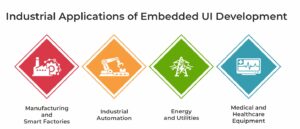
The following are some real-world applications:
1) Manufacturing and Smart Factories
Manufacturers use an embedded user interface to control production equipment in manufacturing facilities. User interfaces also allow monitoring of individual machine performance and management of manufacturing workflows. The user interfaces provide consistency and effectiveness in manufacturing operations.
2) Industrial Automation
Embedded user interface development enables operators to interact with automated systems and programmable controllers to set up production processes, manage automated process flows, and monitor production parameters for automated equipment.
3) Energy and Utilities
Power generation facilities, renewable energy systems, and utility providers rely on embedded user interfaces to supervise critical infrastructure. These interfaces help manage complex operational environments while supporting the monitoring of equipment and resource utilization.
4) Medical and Healthcare Equipment
Embedded user interfaces are used in medical devices to operate them and display information about their operation. Patient monitoring systems and diagnostic equipment can both have embedded UIs, allowing health professionals to use new technologies in a clinical setting through interaction with the medical devices.
In Summary!
As industrial platforms continue to grow, embedded UI development is becoming increasingly important for facilitating effective user interaction with modern systems. It is not only about improving interface designs but also about helping shape the industry by making complex technologies more understandable and aligned with the operational requirements. The role of embedded user interface development is only becoming more significant as industrial systems grow in complexity.
To fuel your technical curiosity with our deeper insights, please visit our official website now.
FAQs
1. How does embedded UI development improve industrial platforms?
Answer: Embedded user interface development helps industrial platforms achieve greater accuracy in their operations by reducing complicated interactions within the system. The process enables real-time monitoring and presents data in an easy-to-understand format, enabling operators to make faster, more informed decisions.
2. Why is a user-friendly interface important in an embedded system?
Answer: A user-friendly interface in an embedded system makes it easy for users to interact with a device or system. It can reduce training time, minimize operational errors, and improve overall user experience while helping organizations derive greater value from their technology investments.
3. Can embedded user interfaces be customized for different industrial applications?
Answer: Yes, embedded user interface development can be customized to specific operational requirements, user roles, workflows, and industry standards to improve operation and performance.
Recommended For You:
The 10 Best in Class Ethereum Development Tools!
MEAN Stack vs Full Stack: Choosing the Right Development Approach