
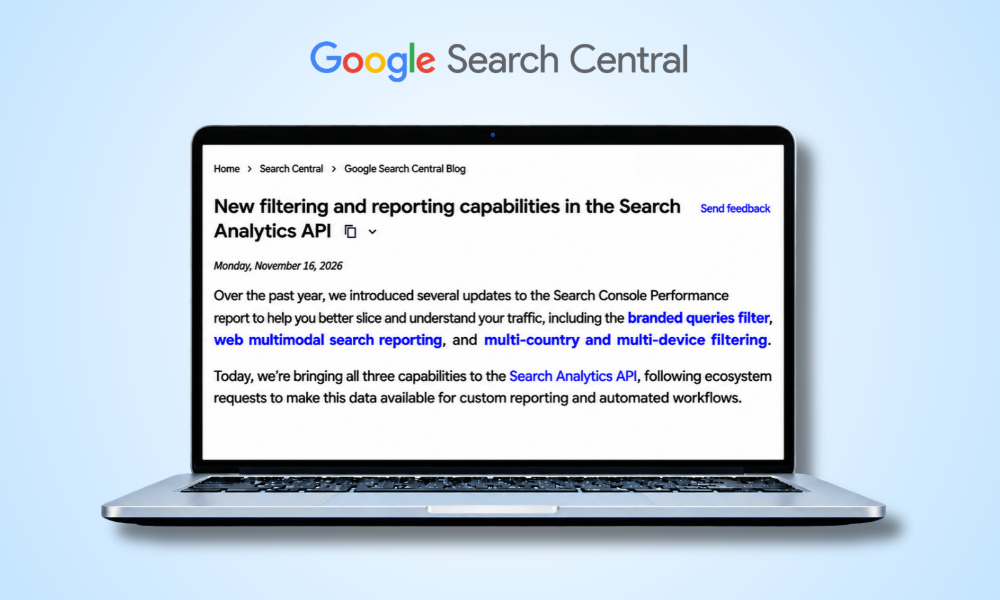
Google has introduced new filters and reporting to Search Analytics API, making it easier for developers and tool providers to access more detailed search performance data and automated reporting workflows. These capabilities were already available in the Search Console web interface and are now supported through the API.
According to Google's Search Analytics API annoucement, the update adds a branded-query filter, web multimodal search reporting, and multi-country and multi-device filtering. With these additions, Google aims to address ecosystem requests by making data more accessible and reducing the need for separate API requests and complex keyword-based filtering.
Three New Features to the Search Analytics API
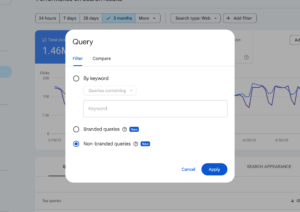
Branded Queries: This feature allows you to group and filter data by brandedClassification. It is divided into two categories: BRANDED and NON-BRANDED. This helps you measure brand recognition and compare traffic from people already familiar with your brand with traffic from those who are not. However, this data is only available for eligible properties, starting from February 21, 2026. If the property does not meet the query and impression thresholds, you will get an empty table (no rows).
Here’s about the branded query filter launched a year ago, on November 20, 2025.
Web multimodal: Searches with Google Lens now come with multimodal performance metrics when set type to webMultimodal. You can get performance data from Google Lens, Circle to Search on Android, and image uploads in Google Search. The announcement says the multimodal data will be available in BigQuery for properties with an active bulk data export but does not give a date.
Google's September 24, 2026, announcement also showed the multimodal option in the report search-type filter. It is designed to give insights into how your content is surfaced when users search using images.
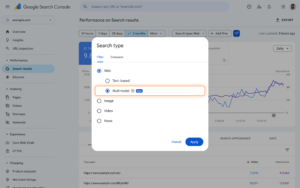
This update is designed to give you insights into how your content is surfaced when users search using images (such as with a smartphone camera).
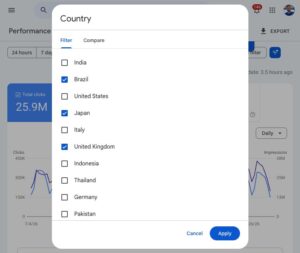
Multi-country and multi-device filters: The third update is the filterLists field, which lets users filter search performance data by multiple countries or devices in a single API request. For example, businesses can group countries into regional markets such as EMEA, LATAM, or DACH without submitting separate requests.
Below are the screenshots of multi-country and multi-device filters.
Multi-country filter:
Multi-device filter:
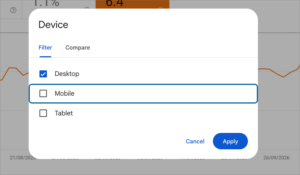
Multi-country and multi-device filters were launched in the last month and let you filter and group by multiple countries and devices at the same time.
Why This Matters?
If you use an API to get data from Google Search Console, or use a tool to do so, these new reporting capabilities provide the features you need. Website owners and developers have flexible options to analyze search performance and better understand search traffic and data.
By integrating these new capabilities into automated dashboards and reporting systems, businesses can simplify data collection, enhance reporting efficiency, and gain insights into changing search behavior.
For all the trending news updates, visit our website now.
Recommended For You:
Google Search Console Performance Report Now Allows Filtering by Multiple Countries