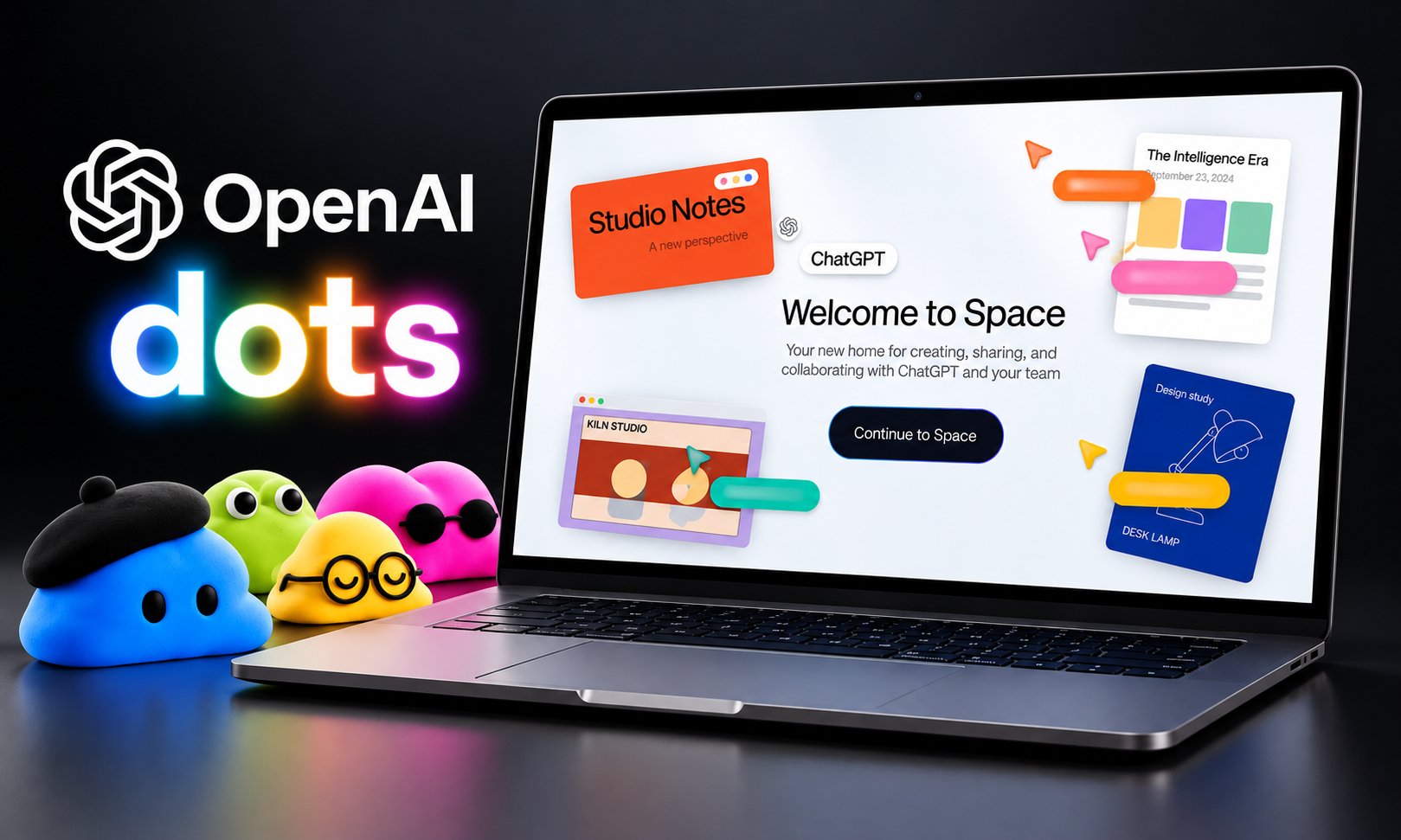
OpenAI expands ChatGPT’s capabilities as a collaborative workspace and brings always-on AI agents to the generative AI chatbot with the launch of ChatGPT Space and Dots. The new products were unveiled at OpenAI’s DevDay event in San Francisco on September 29. The event also saw several other breakthroughs, including Codex in the cloud and Plugin extensions.
According to OpenAI, Dots are designed to handle ongoing responsibilities with limited user intervention. Meanwhile, ChatGPT Space offers teams a shared environment for working with ChatGPT, Codex, and Dots.
Notably, the announcements came one day after the company scrapped the planned launch of GPT-6.1 Astra over safety and alignment concerns. The model had been planned for an October release in ChatGPT and Codex.
ChatGPT Space Allows Teams to Collaborate and Build with AI
ChatGPT Space is a shared home for pages, files, and collaborative work. It replaces Library for accounts that have access to Space, while projects remain separate from the new workspace. Users can create editable pages for project briefs, research, plans, meeting notes, and team updates. The tool allows multiple people to work on the same page in real time. Each collaborator can also use their own ChatGPT to make changes or ask questions.
Space also brings together files, presentations, spreadsheets, images, and connected sources. Therefore, teams can add information from connected applications and use that context during their work. According to OpenAI, the pages can stay updated from connected tools. Users can also ask ChatGPT or a Dot to maintain dashboards and update tasks. Dots can work across files within Space as project information changes.
Dots are Always-On Agents Built to Handle Everything
Dots represent OpenAI’s move toward AI agents that continue working after a conversation ends. OpenAI describes them as always-on agents powered by GPT-6 Astra. A Dot can take responsibility for an ongoing project instead of handling isolated prompts. For this purpose, it can learn how users work and identify tasks requiring attention.
OpenAI allows users to connect Dots with third-party applications such as email, calendars, and files. Dots operate using their own cloud computers and browsers alongside connected tools, Codex, and ChatGPT Work. OpenAI launched Dots with a key focus on control and permissions.
Here, users control permissions and can decide which actions require approval. For this purpose, OpenAI has built approval checks into the system for sensitive actions. Users can set custom rules that allow, block, or require approval for specific activities. Furthermore, specific actions, such as changing a password, remain under direct user control.
Dots are rolling out across the web, mobile, and desktop in eligible markets. OpenAI lists availability for Pro, Business Premium, and Enterprise plans. However, enterprise access can depend on workspace administrator settings.
The Announcements Came After Model Launch Got Scrapped
The introduction of ChatGPT Space and Dots followed OpenAI’s decision to scrap GPT-6.1 Astra, which was set to release in October. The launch was reportedly paused after internal testing found that the model failed to meet OpenAI’s safety and alignment standards. The concerns involved how the model followed instructions and handled potentially unsafe actions.
OpenAI announced ChatGPT Spaces and Dots less than 24 hours after the model cancellation. The timing of the launch suggests the company is pushing autonomous agents alongside increased regulatory focus on agent safety.
KnowledgeNile analyzes every AI advancement and announcement. So, explore our rich content repository and stay ahead with the right information.
Recommended For You:
ChatGPT Introduces New Tasks Feature to Let Users Schedule Their Future Activities
OpenAI Could Soon Offer “Sign in with ChatGPT” Feature for Third-Party Apps